
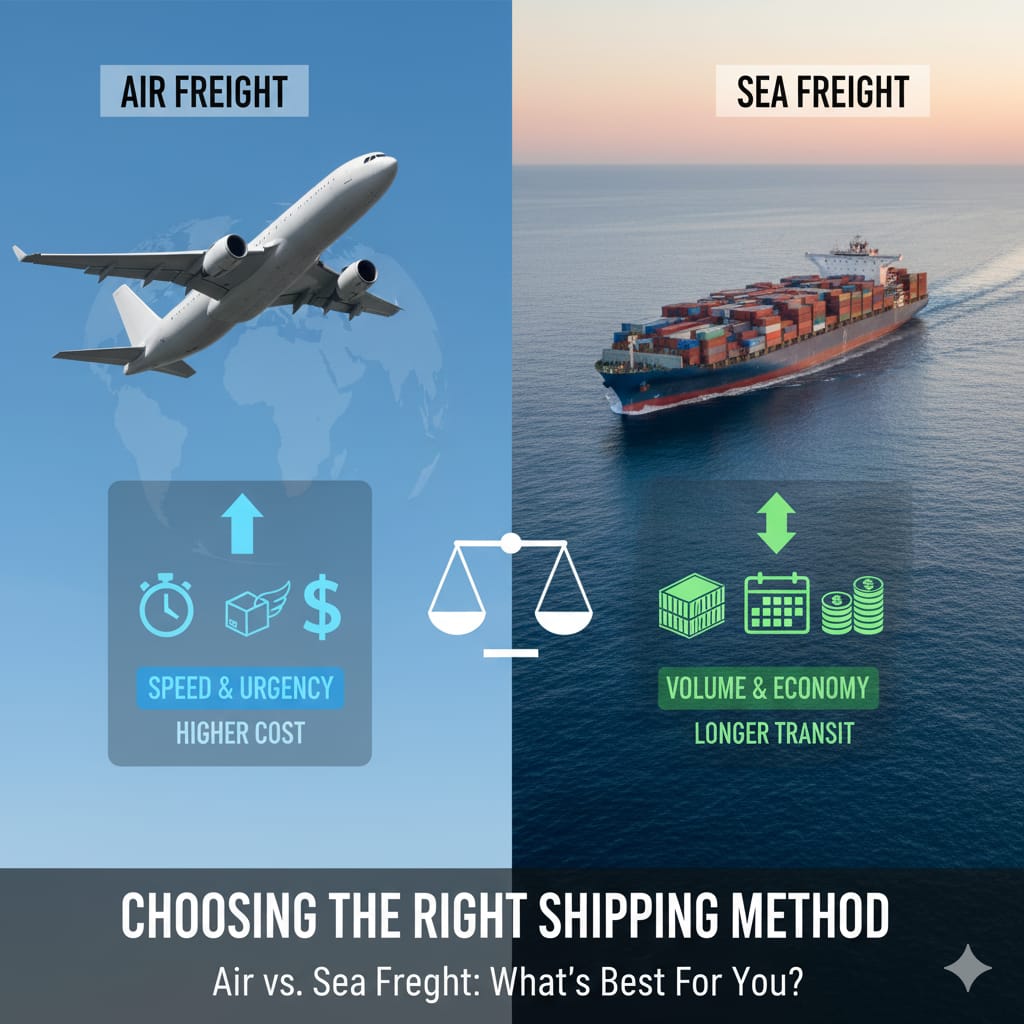
Choosing the Right Shipping Method: Air vs. Sea Freight
Once you’ve secured an order, one of the most important decisions you’ll make is how to get the goods to your client. The choice between air and sea freight isn’t a one-size-fits-all solution; it’s a strategic decision that impacts cost, delivery time, and even the environmental footprint of your business. Understanding the key differences will help you make the best choice for each specific shipment.
Here is a breakdown of the factors you should consider when choosing between air and sea freight.
1. Speed and Urgency
- Air Freight (The Fast Option): If speed is your top priority, air freight is the clear winner. Shipments typically arrive within 1-5 days, making it ideal for high-value goods, perishable items (like flowers or fresh produce), or urgent shipments that need to meet a strict deadline. The reliability of flight schedules also provides a more predictable timeline.
- Sea Freight (The Economical Option): Sea freight is a significantly slower process, with transit times often ranging from 20 to 45 days, depending on the route and any potential port delays. This method is best for shipments where a long transit time is acceptable and cost-effectiveness is the main goal.
2. Cost
- Air Freight: Air freight is almost always more expensive than sea freight. The cost is calculated based on a combination of the shipment’s weight and volume, so it’s most cost-effective for smaller, lighter, high-value goods where the added cost is justified by the speed.
- Sea Freight: Sea freight is the most economical option for large-volume, heavy, and bulky shipments. The cost is generally based on the size of the container you use, making it incredibly cost-effective for bulk commodities, machinery, or a large number of products. For small shipments, you can opt for Less-than-Container Load (LCL), where your goods share container space with other shipments.
3. Volume, Weight, and Type of Goods
- Air Freight: Aircraft have strict limitations on the size and weight of cargo they can carry. This makes air freight unsuitable for oversized or extremely heavy items. It is perfectly suited for electronics, pharmaceuticals, luxury goods, and fashion items that need to be on shelves quickly.
- Sea Freight: This method offers a massive capacity. A single cargo ship can carry thousands of containers, making it the perfect solution for bulk cargo, large machinery, raw materials, and anything that is too large or heavy for an aircraft. Sea freight is highly versatile and can even handle specialized cargo in temperature-controlled (refrigerated) containers.
4. Reliability and Security
- Air Freight: Due to strict airport security and minimal handling, air freight is considered a very secure method with a low risk of theft or damage. While flights can be delayed by weather, the overall scheduling is more predictable than sea freight.
- Sea Freight: The longer transit time and multiple touchpoints at ports can increase the risk of damage or delay. While modern containers are highly secure, they are more susceptible to external factors like port congestion, customs inspections, and adverse weather conditions at sea, which can impact the schedule.
5. Environmental Impact
- Air Freight: Air travel has a much larger carbon footprint per unit of cargo than sea freight, making it the less environmentally friendly option.
- Sea Freight: Despite the high volume of cargo they carry, ships are far more fuel-efficient per ton-mile. This makes sea freight a more sustainable and greener choice for businesses focused on reducing their environmental impact.
Which Should You Choose?
The right shipping method for your business depends on your specific needs for a given shipment.
- Choose Air Freight if: Your shipment is time-sensitive, high-value, perishable, or relatively small and lightweight, and the higher cost is justifiable.
- Choose Sea Freight if: Your shipment is large, heavy, non-urgent, and cost-effectiveness is your main priority.
We at OFFSHOREWAVE have extensive experience in both air and sea freight logistics. We can help you analyze your specific needs and choose the most efficient and cost-effective shipping method for every order.